

8 Kitchen Design Trends Feeling Dated in 2026 – and What Endures Instead
The most compelling kitchens of 2026 are moving beyond one-note formulas. Here’s what is beginning to feel tired – and how materiality, balance and intelligent cabinetry create spaces with staying power.
Kitchen design moves quickly. But an enduring kitchen is rarely defined by what is suddenly “in” or “out.
The more interesting shift in 2026 is away from default decisions: one finish everywhere, one stylistic idea repeated too literally, storage added without considering movement, or decorative gestures that compete instead of compose.
Industry research points in the same direction. NKBA’s 2026 Kitchen Trends Report identifies transitional/timeless design as the leading style direction among surveyed professionals, with contemporary/minimalist and organic/natural design close behind. The report also points toward natural materials, minimal detailing, personalization and smarter storage. Houzz’s 2026 study similarly finds wood cabinetry edging ahead of white among renovating homeowners, while functionality has become nearly as important a remodeling motivation as dissatisfaction with an outdated style.
The result is not a new uniform look.
It is a more considered one.
Here are eight kitchen design ideas that can begin to feel dated in 2026 – and what creates a more lasting sense of beauty instead.
1. Monochrome Without Material Depth
A neutral kitchen can be exquisite. The problem begins when neutral becomes one-note.
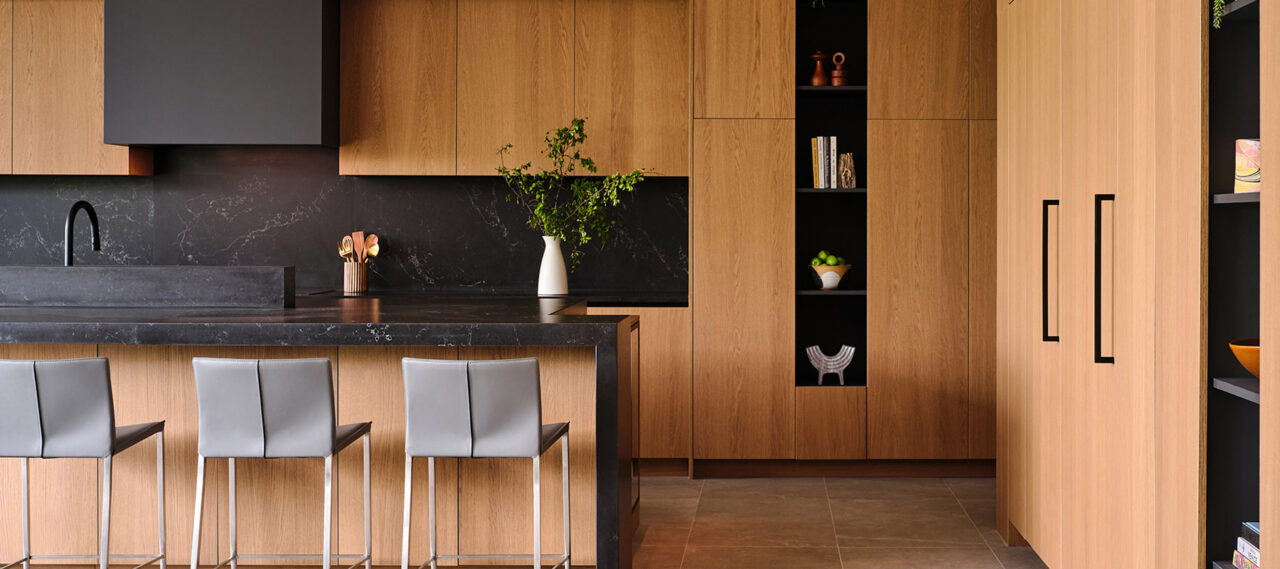
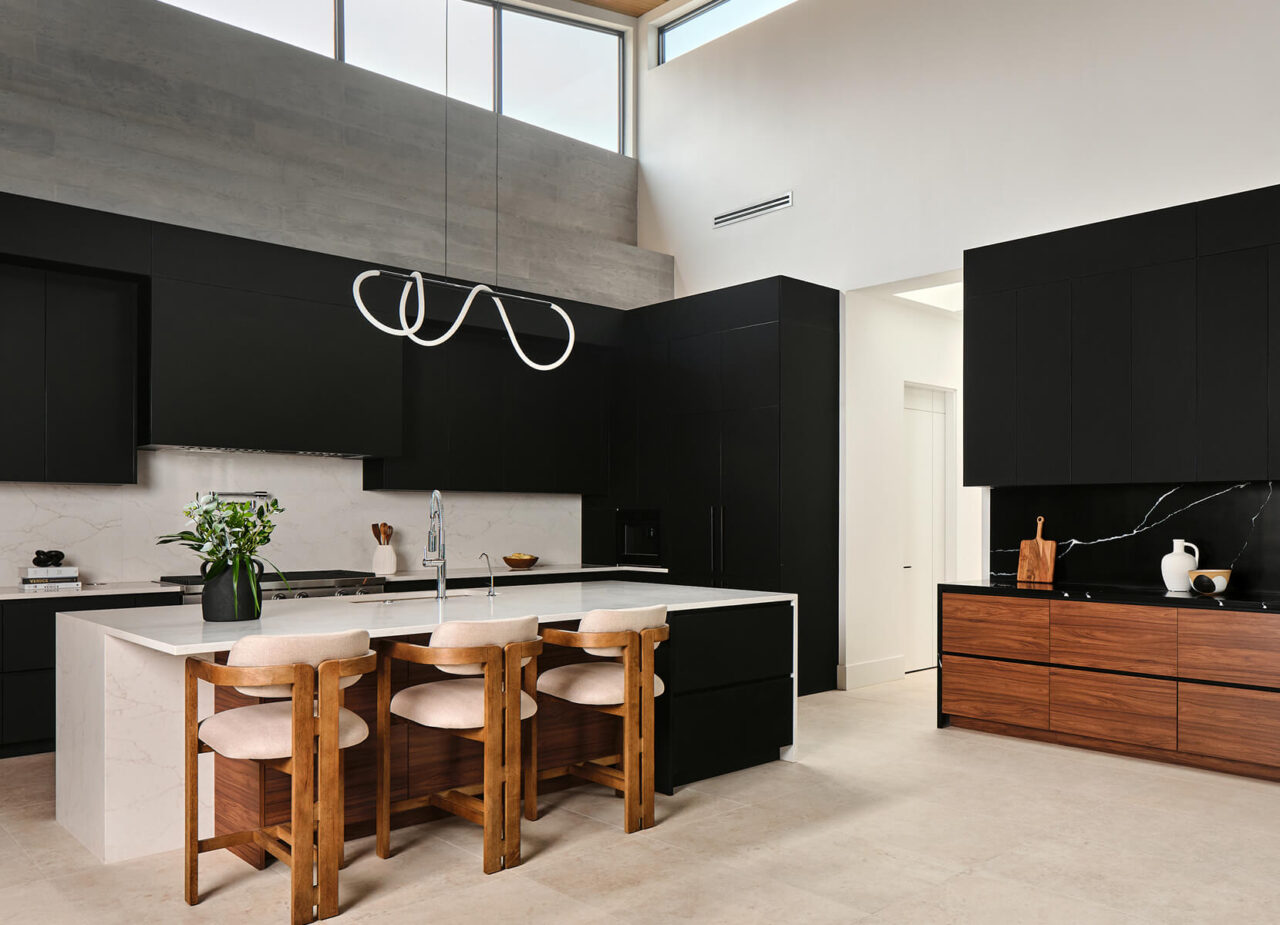
The same pale finish across cabinetry, counters, walls and flooring may create visual continuity, but without variation in texture, sheen or material, that continuity can turn flat. What the eye wants is somewhere to linger: the grain of wood against a velvety lacquer, luminous stone beside a quiet matte surface, a dark detail sharpening an otherwise soft composition.
That movement toward material warmth is visible in the 2026 research. NKBA reports that 59% of surveyed industry professionals see wood-grain cabinetry growing in popularity, while Houzz found wood cabinetry selected by 29% of renovating homeowners, narrowly surpassing white at 28%.
What endures instead: layered restraint.
A kitchen can remain beautifully neutral while letting different materials speak. Warm oak with soft gray. Walnut against an understated lacquer. Natural stone carrying movement through an otherwise minimal room.
The palette whispers. The materials provide the pleasure.
2. Gray and White as an Automatic Formula
Gray and white are not “over.” Designing with them on autopilot is.
White can still feel luminous, serene and architectural. Gray can still bring depth and composure. What increasingly feels dated is the assumption that combining the two automatically creates sophistication.
Houzz’s 2026 study shows how the palette is broadening: wood cabinetry now slightly exceeds white among renovating homeowners, while gray accounts for just 5% of cabinet-color selections in the study. Meanwhile, Architectural Digest’s survey of
2026 kitchen directions highlights deeper, earthier color and more expressive material choices alongside highly functional design.
The distinction is important.
A luminous white kitchen framed by warm wood, dramatic stone or a precisely chosen metal can feel sensual and timeless. A cool gray-and-white composition with nothing to interrupt it can feel impersonal.
What endures instead: warmth, tension and intentional contrast.
The goal is not necessarily more color. It is more feeling.

3. Texture Everywhere
Fluting, reeding, moldings and dimensional cabinet fronts can be beautiful.
But when every door becomes a feature, detail loses its power.
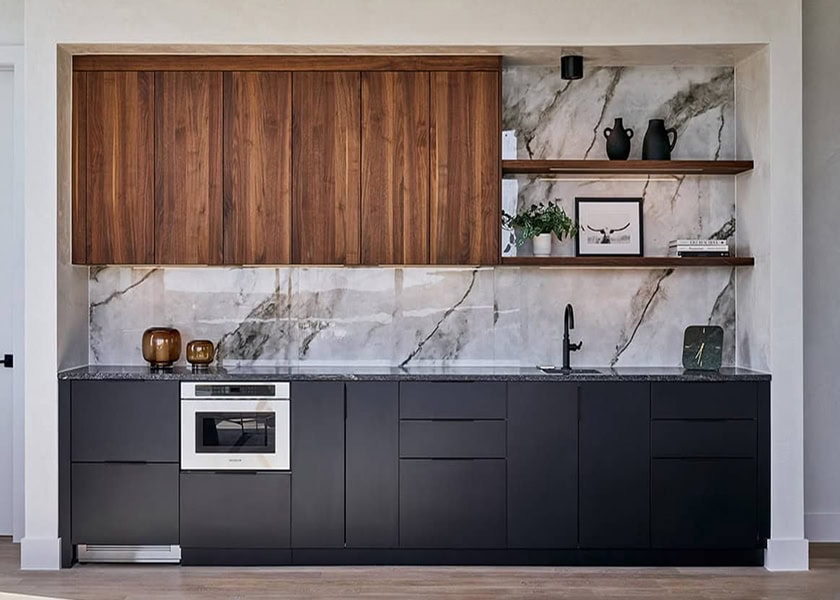
The more sophisticated direction is selective: allowing one tactile moment to establish rhythm while quieter surfaces give it space to be seen. A fluted island against disciplined slab cabinetry. A richly figured wood panel surrounded by clean architectural planes.
A sculptural handle rather than hardware competing across every elevation.
NKBA’s 2026 research supports the broader move toward visual restraint: 60% of respondents identified minimalism as a popular direction for the coming three years, and 69% identified flat slab cabinet doors as gaining popularity.
That does not make ornament obsolete. It makes editing more important.
What endures instead: fewer gestures, more intention.
Luxury rarely needs every surface to announce itself.
4. White Subway Tile Specified by Habit
There is nothing inherently wrong with white subway tile.
Its weakness is familiarity.
When a material is chosen simply because it is the expected answer, it stops contributing much to the architecture of the room. The question for 2026 is less “Is subway tile dated?” and more “What is this surface doing for the composition?”
NKBA reports that slab and solid-surface backsplashes are among the features gaining momentum, identified by 75% of respondents. Architectural Digest, meanwhile, points to renewed experimentation with ceramic surfaces and handcrafted ceramic details – evidence that the backsplash is increasingly being treated as an opportunity for material expression rather than a default backdrop.
What endures instead: material with purpose.
That may be softly veined stone continuing upward from the counter. Handmade tile with subtle irregularity. A quiet slab that allows remarkable cabinetry to lead.
Even classic subway tile can work beautifully when its scale, finish, grout and relationship to the surrounding materials feel deliberate.
Timelessness is rarely about the material alone. It is about the way the material belongs.
5. Farmhouse as a Theme
The warmth associated with farmhouse interiors – natural materials, familiarity, comfort – is not the problem.
Themed design is.
When distressed finishes, decorative signage, rustic hardware, apron-front elements and overtly nostalgic details all arrive together, the kitchen begins telling one story too loudly.
The broader 2026 direction is more nuanced. In NKBA’s research, transitional/timeless, contemporary/minimalist and organic/natural design are the three strongest style categories anticipated by respondents for the years ahead.
That leaves plenty of room for heritage.
A beautifully proportioned cabinet profile can nod to tradition. A natural timber can bring warmth. A handmade material can introduce soul. But none needs to turn the room into a theme.
What endures instead: character without costume.
A home feels richer when references are absorbed into the architecture rather than applied on top of it.
6. An Uninterrupted Row of Identical Upper Cabinets
More storage is not the enemy of beautiful design.
Visual weight without composition is.
A long sequence of identical upper cabinets can make a room feel compressed, particularly when every elevation is treated with the same rhythm. But eliminating cabinetry simply to make a kitchen appear lighter can create a different problem: a beautiful room that asks daily life to accommodate the photograph.
Current research actually points toward more intelligent cabinetry, not simply less of it. NKBA identifies floor-to-ceiling cabinetry, more drawers, pantry solutions and storage-rich islands among the storage directions gaining attention.
The opportunity is to treat cabinetry architecturally.
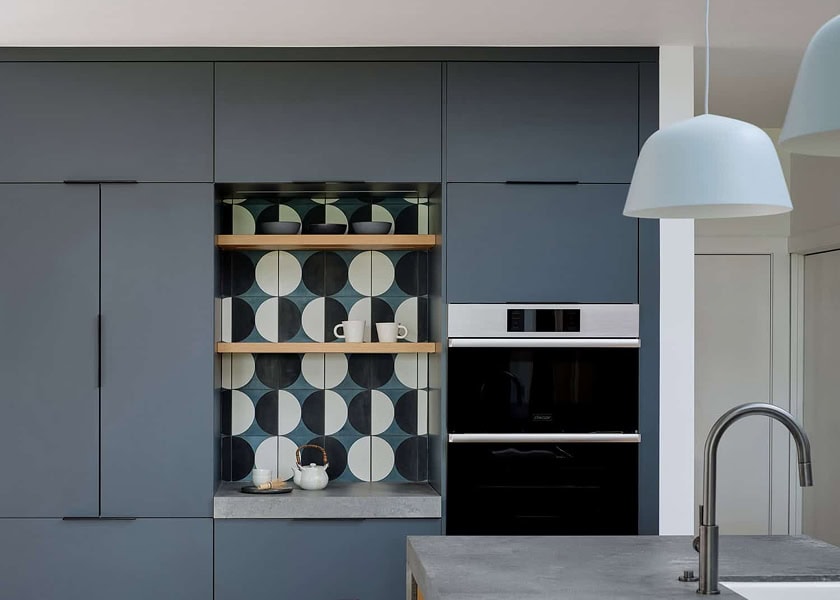
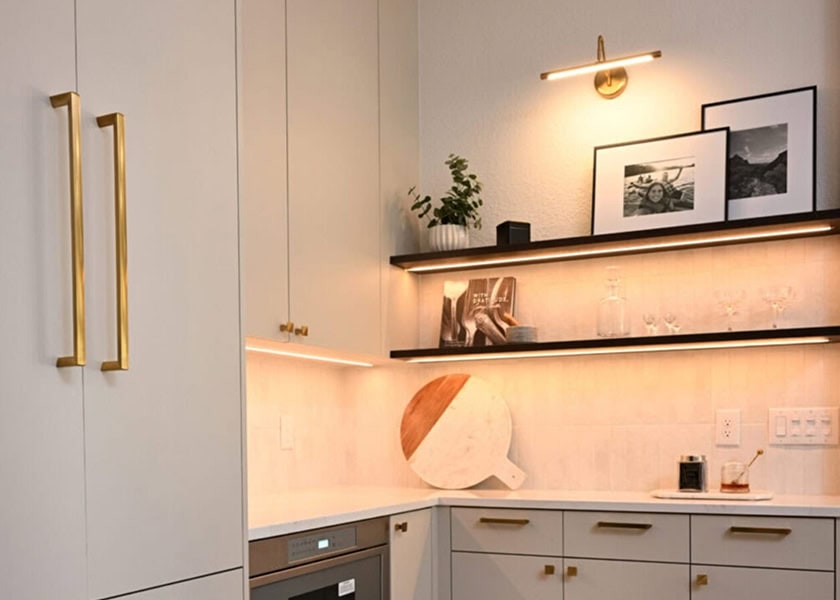
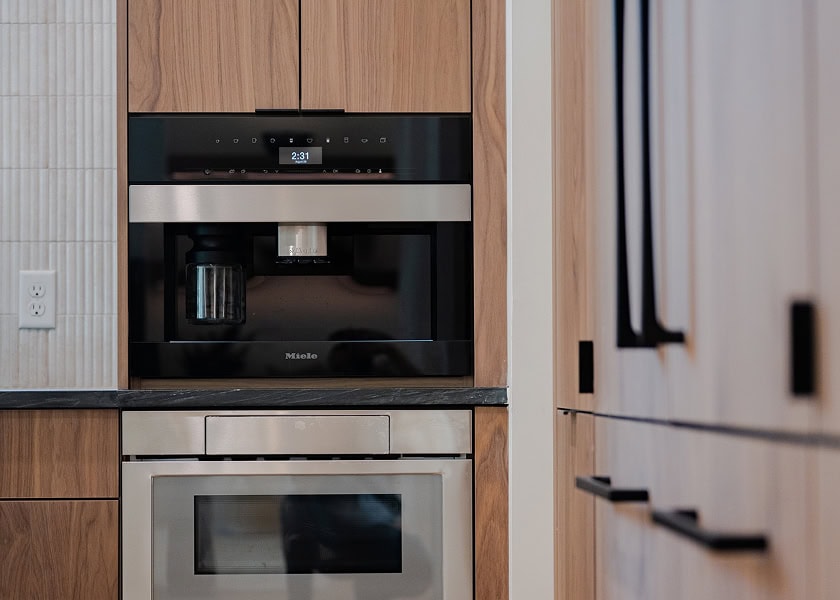
Tall storage can read as a seamless volume rather than a collection of boxes. A bank of cabinetry can pause for stone, art, glass or an illuminated niche. Integrated appliances can disappear into the composition. A carefully placed open moment can make the surrounding closed storage feel calmer.
What endures instead: storage shaped by rhythm.
What disappears is not necessarily the cabinet. It is the visual noise.
7. Open Shelving as the Entire Storage Strategy
Open shelving is at its best when it creates a moment of pleasure.
A beautiful object. A stack of handmade ceramics. Glass catching soft light. Something personal given room to breathe.
It becomes less convincing when it is expected to carry the full burden of everyday storage.
The current emphasis on concealed and purpose-built storage is significant. In Houzz’s 2026 study, 76% of renovating homeowners incorporate built-in features, with pantry cabinets the most common built-in addition. NKBA likewise identifies enhanced storage, pantry solutions and storage-rich cabinetry as important directions.
The better balance is reveal and conceal.
Keep what gives pleasure visible. Give everything else a considered place behind the cabinetry.
Then open shelving stops behaving like storage infrastructure and becomes what it does best: a pause in the architecture.
8. Base Cabinets Designed Around Doors Instead of Access
A beautiful kitchen should not ask you to fight it.
Deep lower cabinets filled with shelves can technically provide storage while still making what is inside difficult to see or reach. The more refined approach begins with movement: where an object belongs, how the hand reaches it, and how naturally one activity flows into the next.
The 2026 research reflects that emphasis. NKBA identifies cabinetry with more drawers as part of the move toward smarter storage. Houzz reports that among homeowners incorporating accessibility features for long-term needs, pullout cabinetry is the most common choice, selected by 59% of that group.
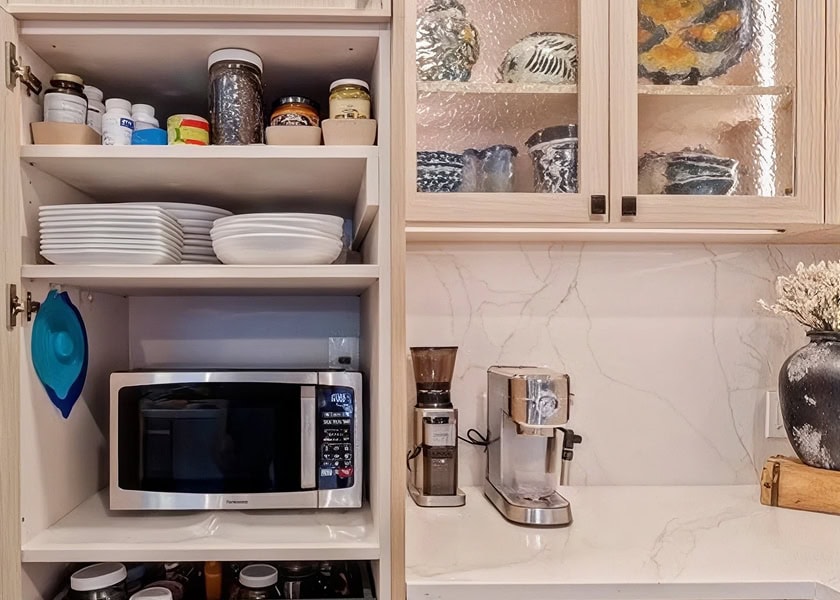
What endures instead: drawers, pullouts and interiors designed around the rituals of the person who lives there.
Cooking tools near the place they are reached for. Plates where they can be lifted without searching. Ingredients visible at a glance.
Small appliances present when wanted and quiet when they are not.
This is cabinetry as mise en place: not merely storing life, but composing it.
The Real Kitchen Trend for 2026: Design That Knows When to Stop
Perhaps the most dated idea of all is the belief that a sophisticated kitchen needs to demonstrate every current trend.
The strongest kitchens feel composed rather than collected.
They balance smoothness with texture. Restraint with sensuality. Concealment with moments of reveal. Visual calm with the richness of materials you want to touch.
And underneath the beauty is an invisible order: cabinetry that anticipates movement, storage that quiets clutter, and details that make the everyday feel almost effortless.
That conclusion is consistent with the larger 2026 picture. NKBA’s research points toward minimal detailing, natural materials, personalization and smarter storage, while Houzz documents growing attention to function, layout and long-term ease.
Trends will keep moving.
A kitchen designed around contrast, intention, pleasure and flow has a better chance of moving beautifully with you.
Ready to Design a Kitchen That Feels as Good as It Looks?
LAVISH kitchen + bath creates precision-crafted custom cabinetry designed, manufactured and installed in Central Texas, with kitchen projects serving Austin, San Antonio and surrounding areas. The LAVISH approach brings European-inspired cabinetry together with thoughtful organization, tactile materials and a design process centered on ease from concept through installation.
Related articles
A Small Bathroom, In Flow: Five Cabinetry and Design Moves That Make the Room Feel Larger
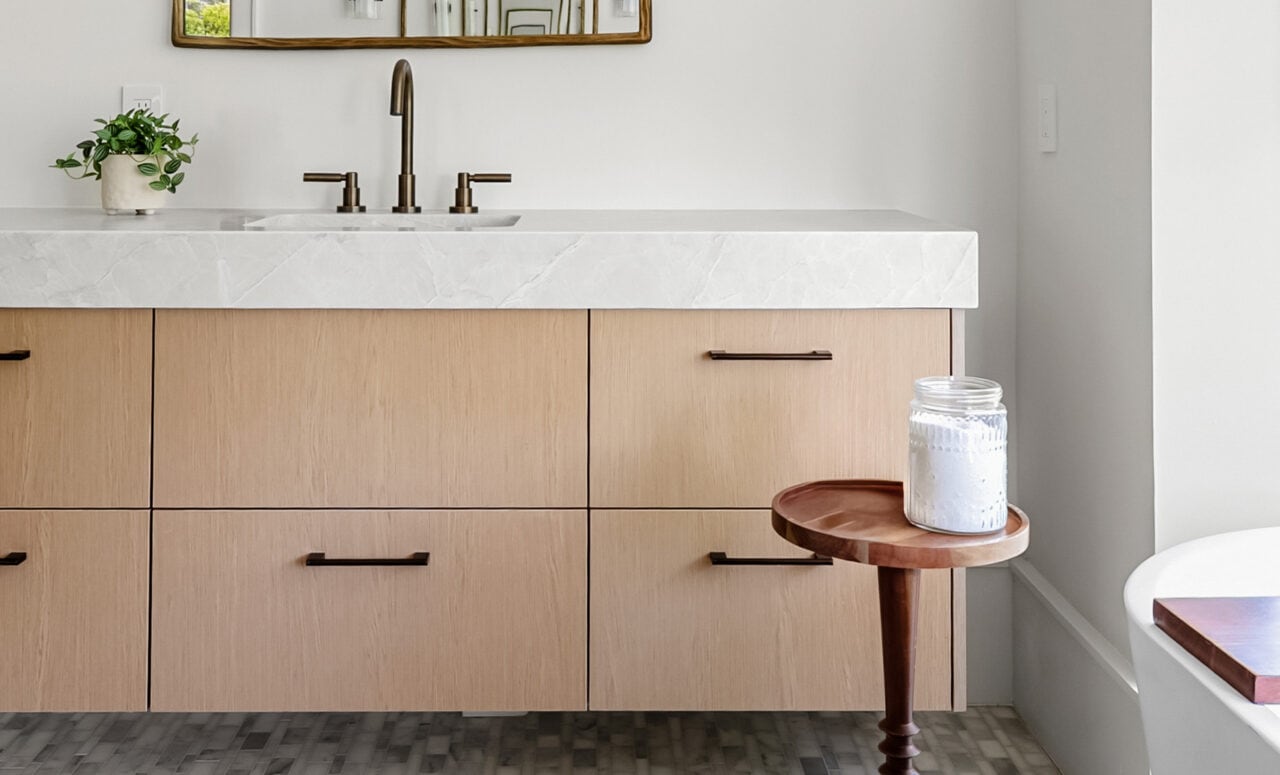
A small bathroom doesn’t have to feel small. The bathrooms that feel open share two habits: long sight lines, and very few visual interruptions. Nobody got there by shrinking the fixtures. In a small space, elegance is mostly a matter of omission. Here are five of the ways we design a bathroom, from the cabinetry…
A recognition of trust, craft, and enduring beauty: LAVISH named among Austin’s AD PRO Directory talents
We’re quietly delighted to share that LAVISH Kitchen + Bath has been featured in Architectural Digest’s AD PRO Directory and included in AD’s curated spotlight, “42 Austin Interior Designers and Architects to Know From the AD PRO Directory.” This recognition mirrors the trust our clients place in us – and the care we bring to…
Dominion Tour: Three Kitchens, One Seamless Flow
Three premier San Antonio builders – Adam Wilson, Image, and Stadler – trusted LAVISH to compose three distinct, European-inspired frameless kitchens for the Dominion Luxury Home Tour. Locally manufactured, precisely installed, and finished on time – so each space moves with a seamless, luxurious flow. Three Visions.One Seamless Flow. Earlier this year, the Dominion Luxury…

Why Frameless Cabinetry is the Future of Luxury – and Why We’re So Obsessed
At LAVISH kitchen + bath, we don’t follow trends. We set the standard. And when it comes to cabinetry, frameless is the form we’ve fallen for. Frameless cabinetry isn’t just a style choice – it’s a design evolution. Clean lines. Seamless surfaces. Precision so refined it disappears into the beauty of the whole. This isn’t…

Unlock fresh
design ideas
"*" indicates required fields